
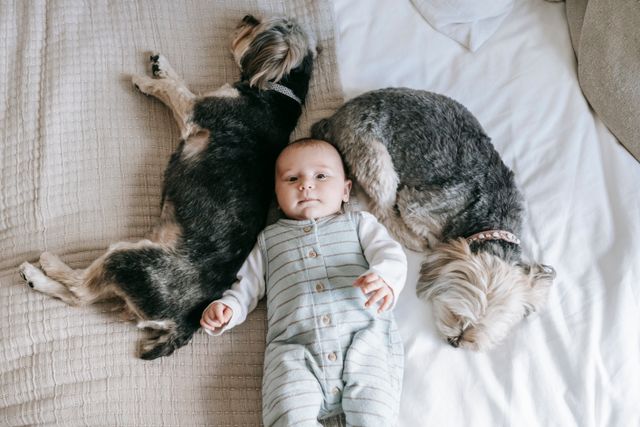
The Irresistible Charm of Babies and Pets
Few images tug at heartstrings faster than a baby cuddling with the family golden retriever or a curious kitten peering into a crib. In online baby photo contests, images featuring animals consistently achieve massive vote velocity. However, behind every viral pet-and-infant portrait lies a serious safety equation.
Even the most gentle, loyal family pet is still an animal with natural instincts, startle reflexes, and unpredictable reactions. Creating an award-winning pet and baby portrait requires a safety-first framework that protects both your child and your pet while capturing genuine connection.
1. Understanding Subtle Animal Stress Signals
The greatest mistake parents make is assuming that because a pet has never shown aggression, they are comfortable with an infant in their space. Animals communicate discomfort long before they growl or scratch. If you notice any of these signs during a photoshoot, pause immediately:
- In Dogs: “Whale eye” (showing the whites of their eyes), repetitive lip licking when no food is present, excessive yawning, stiffening of the body, or turning the head sharply away.
- In Cats: Twitching tail tips, flattened ears (airplane ears), dilated pupils, or low-body crouches.
Never force an animal to sit next to a baby if they want to walk away. A relaxed pet produces a soft, authentic portrait, whereas an agitated pet poses an immediate physical danger.
2. The Golden Rule: Physical Barriers and Elevation
A contest-winning photo does not require your infant to sit directly on your pet. In fact, professional pet and child photographers almost always use barrier staging to create the illusion of closeness without physical contact.
- The Elevated Crib or Moses Basket: Place your baby securely inside a sturdy basket or crib, positioned 12 to 18 inches off the ground. Allow your dog or cat to sit on the floor beside it, looking upward toward the infant. This eliminates accidental stepping or clawing.
- The “Two-Adult” Protocol: Never attempt a pet-and-baby shoot alone. One adult must act as the primary handler for the pet on a loose leash, while the second adult operates the camera and monitors the baby.
- Avoid Floor Posing for Newborns: Never place an uncoordinated newborn flat on a floor rug right next to a large dog. A sudden doorbell or noise outside can cause a heavy dog to bolt, inadvertently stepping on fragile infant limbs. Review our safety standards for choosing safe photoshoot props before introducing decorative items into pet sessions.
3. Staging and Directing the Shot
Getting both a baby and an animal to look at the camera simultaneously requires calculated bribery and strategic noise placement.
- Treats Behind the Lens: Hold a high-value treat (like a piece of roast chicken or a favorite squeaky toy) directly above the camera lens. The pet’s gaze will lock firmly onto your camera body.
- High-Pitched Attention Noises: Use novel sounds—such as a gentle whistle, a rustling chip bag, or clicking sounds—to grab your baby’s attention at the exact same moment.
- Patience Over Posing: Candid interactions always score higher than rigid posing. Allow your dog to sniff your baby’s toes, or capture a cat sitting peacefully on the window sill behind the nursery rocking chair. For more on natural storytelling, explore our guide on candid versus posed baby photography.
4. Hygiene and Allergies
Before staging your photoshoot, groom your pet thoroughly. Brush out loose undercoat fur, wipe paws with pet-safe damp cloths, and trim sharp dog nails or cat claws. Keep sanitizing wipes within arm’s reach. If your pet licks your baby’s hands or face, wash the area promptly with warm water to prevent accidental bacterial transfer or sudden facial skin breakouts before your contest submission.


