Baby’s First Food Photos: How to Capture the Moment Safely
How to photograph your baby's first solid foods safely: when to shoot, a simple setup, what to capture, safe food reminders and mistakes to avoid.

Rahul Thakur writes the parenting and photography guides on VoteMyBaby, covering simple baby photo tips, safe photoshoot ideas and how the free baby photo contest works.

Your baby’s first taste of solid food is a moment you’ll want to remember: the scrunched nose, the wide eyes, the surprised little tongue. It’s also a moment where safety comes first, because feeding a baby is not a good time to chase a perfect photo. This guide shows how to capture first-food photos that look natural and cheerful while keeping mealtime calm and safe. It covers when to take photos, simple setups, what to feed, and what to leave out of the frame.
This is general guidance, not medical advice. Ask your paediatrician when to start solids and which foods suit your baby.
Put feeding first, photos second
Health organisations such as the World Health Organization and the American Academy of Pediatrics generally suggest introducing solid foods at around six months, when a baby can sit with support and shows interest in food. Your paediatrician can tell you what’s right for your baby. Whatever the timing, a few rules keep the photo session safe:
- One adult feeds, another photographs, if you can. If you’re alone, take a few quick photos and then put the phone down.
- Keep your baby upright and supervised in a stable high chair with the straps fastened. Never leave a baby alone with food, even for a moment.
- Stop if your baby is unhappy. Turning away, closing the mouth or crying means mealtime is over, and the camera should go away too.
- Choose safe foods. Avoid whole nuts, whole grapes, popcorn, hard raw vegetables and anything else that can block a small airway. Don’t give honey to babies under one year old.
It also helps to know basic infant safety rules in general; our newborn photo safety checklist covers support, warmth and short sessions that apply to babies of every age.
The best time to take first-food photos
Pick a time when your baby is alert and a little hungry but not desperate. Right after a nap and a milk feed is often a good window, because babies are calm and curious. If your baby is tired or very hungry, the photos will show a grumpy face, and the first taste is likely to go badly. Plan to shoot for about ten minutes, with the food already prepared so you aren’t rushing around. For more on matching photos to your baby’s rhythm, see our guide to the best times of day to photograph babies.
A simple, tidy setup
First-food photos look best when the background is calm and the light is soft. You don’t need props or a special backdrop.
- Move the high chair near a window. Soft daylight from the side flatters skin and keeps colours true. Turn off harsh overhead lights, which cast shadows under the eyes. Our window light guide explains how.
- Clear the tray and the background. A plain wall or a tidy kitchen corner is enough. Remove bottles, cloths and anything bright that pulls attention from your baby’s face.
- Dress for the mess. A soft bib in a plain colour and a comfortable top are enough. A fully clothed baby also suits most contest rules, which usually don’t accept bathing or diaper-only photos.
- Use a plain bowl and spoon. A simple coloured bowl looks clean on camera, and a soft-tipped baby spoon is safer than anything hard.
- Keep a wet cloth nearby so you can wipe hands and face before the next photo, and so the messy moments stay manageable.
What to photograph
You’ll get more natural pictures if you think in small moments, not a single “perfect” shot.
- The approach: your baby looking at the spoon with wide eyes and an open mouth.
- The first taste: the scrunched nose, the pause, the thinking face. Put your phone on burst mode and let it run for a couple of seconds.
- The reaction: a smile, a frown, or a very serious stare. All of them make good photos.
- The hands: tiny fingers grabbing at a spoon or exploring a soft piece of banana.
- The mess: a smeared cheek or a food-covered tray tells the story of the day, as long as your baby is happy and safe.
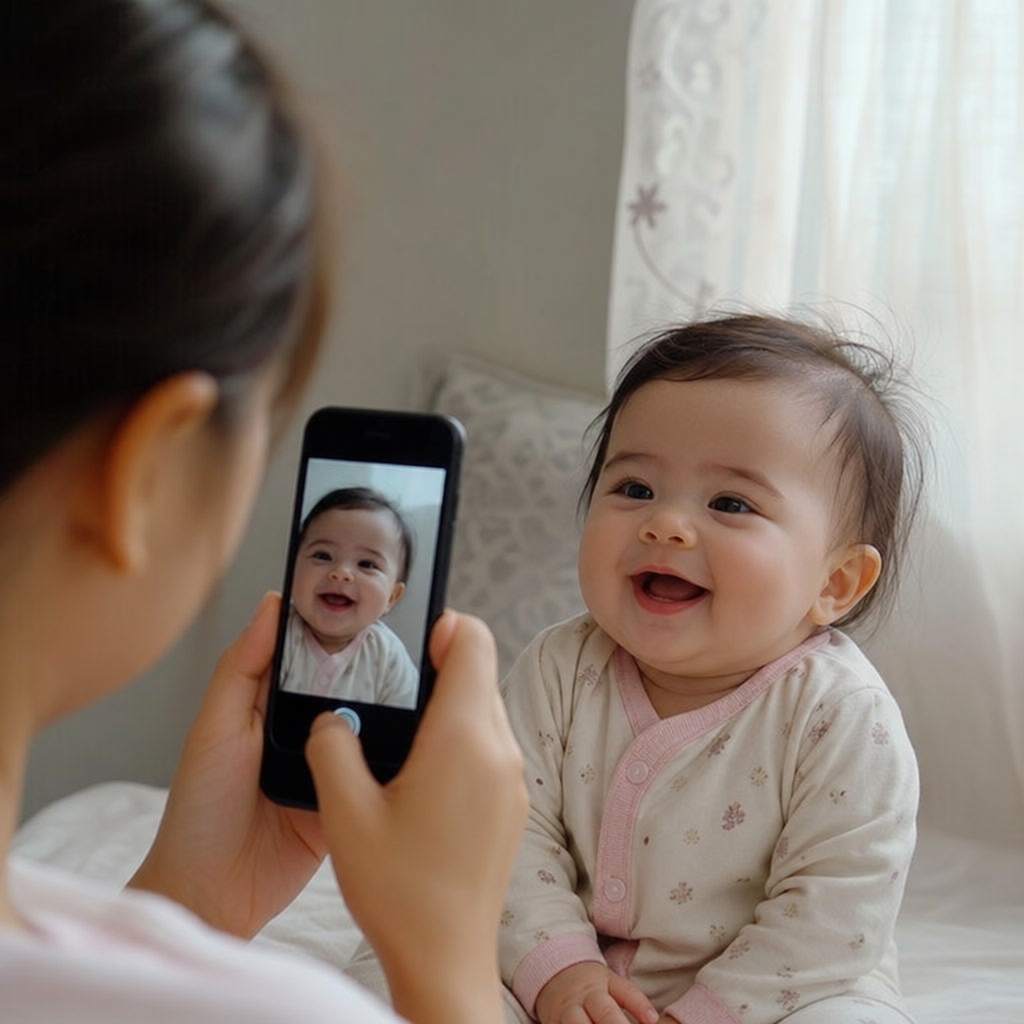
Get down to your baby’s eye level, because shooting from above makes the high chair and tray the main subject. Hold the phone steady and tap on your baby’s eyes to focus. If your pictures often come out soft, our guide to taking sharp baby photos on a phone can help. For framing ideas, read our composition tips.
Foods that photograph well and are common first choices
Many families start with simple, smooth foods such as mashed banana, well-cooked and mashed rice or lentil dishes, or iron-fortified baby cereal mixed to a thin consistency. Always follow your paediatrician’s advice on which foods to introduce and how to prepare them for your baby’s age, and watch for any allergic reaction. Pale foods can look dull in photos, so a colourful bowl or a bright bib helps without adding anything unsafe. Avoid decorating with food colouring, sprinkles or anything small.
Mistakes to avoid
- Staging a first bite repeatedly. Feeding the same food again and again for photos can upset your baby and lead to overfeeding.
- Distracting your baby with the phone. A baby watching a screen isn’t paying attention to the food, and it also teaches the wrong habit at mealtimes.
- Using a flash. Soft window light is gentler and gives better colours.
- Posting without thinking. Check the background for a house number, school logo or location sign before you share. Our privacy checklist lists what to remove.
Choosing and polishing your favourite
After mealtime, scroll through your burst and look for the frame with open eyes and a clear expression, even if it’s a funny face. A little cropping and brightness is all it needs; our phone editing guide shows a gentle routine. A candid photo like this often says more than a posed one, as we explain in candid versus posed baby photography.
If you’d like to enter a favourite photo in VoteMyBaby’s free contest for children aged 0 to 10, read the Official Contest Rules first, and use the participation page when you’re ready.
Quick checklist
| Before | During | After |
|---|---|---|
| Paediatrician says your baby is ready | Baby upright, buckled and supervised | Choose the clearest, happiest frame |
| Window light, plain background | Burst mode at eye level | Crop and brighten gently |
| Safe foods, soft spoon, wet cloth | Stop at the first sign of upset | Check the background before sharing |
Common questions
When should I take photos of my baby’s first solid food? When your paediatrician agrees your baby is ready, usually around six months, and when your baby is calm and alert.
Is it okay to take photos while feeding? Yes, as long as the photos never get in the way of supervision. If you’re alone, take a few quick shots and put the phone down.
What if my baby makes a face and refuses the food? That’s very normal and often makes the best photo. Don’t force it; babies often need several tries to accept a new taste.
For more ways to document your baby’s growth beyond the first meal, explore our DIY baby milestone photography guide. It shows how to keep a simple, repeatable photo record through the first year.
Ready to celebrate your little star?
Submit your baby's photo to our free one-month contest. Final award categories are based on verified rank after the fair-play audit. See the Prizes & Certificates page for details.